Why Students Learn Better Through Games
Game mechanics — clear goals, immediate feedback, and visible progress — tap into the same motivational systems that make video games engaging, and when those mechanics connect to a real classroom economy, learning stops feeling like something done to students and starts feeling like something they are winning.
The Engagement Gap Teachers Face Every Day
Even your best-planned lessons compete with the constant stimulation students experience outside school. Participation drops. Risk-taking disappears. You spend more energy pulling students in than teaching the content you prepared.
That is not a lesson-design failure. It is a motivation architecture problem — and game-based learning addresses it directly.
When done well, gamification does not distract from learning. It makes effort visible, failure safe, and progress worth celebrating.
What Game-Based Learning Actually Means
Game-based learning applies game mechanics — points, levels, challenges, rewards, and progress tracking — to academic activities.
Common elements include:
Points for participation, effort, and skill practice
Classroom challenges and team-based goals
Daily learning games that reinforce math, literacy, and logic
Class-wide reward targets students work toward together
Visible progression through avatars, levels, and balances
These mechanics work because they provide three things students naturally respond to: clear goals, immediate feedback, and visible progress.
When students know what they are working toward and see improvement in real time, motivation increases — often dramatically.
Why Games Reduce the Fear of Failure
In many games, failure means trying again — not a red mark that defines you for the week.
That mindset shift matters in classrooms where reluctant learners have learned to associate mistakes with embarrassment. Gamified environments normalize effort, allow retries, and celebrate small wins along the way.
Research consistently shows that game-based approaches increase engagement, focus, and retention when games reinforce academic skills rather than replace them.
For a research-backed overview of token systems, see science-backed gamification with Classroom Hero.
Daily Games That Feed a Real Economy
The most effective classroom games are not one-off websites with scores that disappear when the tab closes.
Classroom Hero includes nine short daily games covering math, literacy, typing, language, logic, and memory. You control which games are enabled, difficulty, points per completion, and daily caps — so practice stays focused and fair.
Because points flow into the same balance as behavior rewards and quiz wins, students see morning math practice and afternoon Jeopardy as part of one progress story — not disconnected distractions.
Collaboration Through Shared Goals
Gamification is not only about individual rewards. Class goals (class goals) let the whole room work toward a collective target — extra recess, a celebration, a special activity.
Students can contribute earned points toward that goal, making real trade-off decisions: save for themselves or invest in the group. That builds relatedness and classroom culture alongside individual accountability.
AI Review Games Without the Prep Burden
Fresh content keeps game-based learning from becoming stale. Atlas AI generates quizzes and lesson materials in minutes. AI Jeopardy builds curriculum-aligned review boards in seconds — points integrate automatically when students succeed.
Making Progress Visible Beyond the Screen
3D student avatars level up as points accumulate. The Class Screen projects live balances, avatar grids, timers, and daily messages during transitions — so game-based learning becomes part of the room’s energy, not a hidden laptop activity.
The Key: Games That Support Learning
Gamification works when it reinforces skills you already teach — not when it turns the classroom into an arcade disconnected from standards.
Combine clear goals, meaningful rewards, daily practice games, and a unified economy, and game-based learning becomes a sustainable routine instead of a novelty that fades by October.
For practical implementation ideas, see our guide on how to gamify learning in elementary classrooms.
Turn Effort Into Progress Students Can See
Students learn better through games because games make effort visible — participation becomes recognition, collaboration becomes shared success, and practice becomes progress toward rewards that matter.
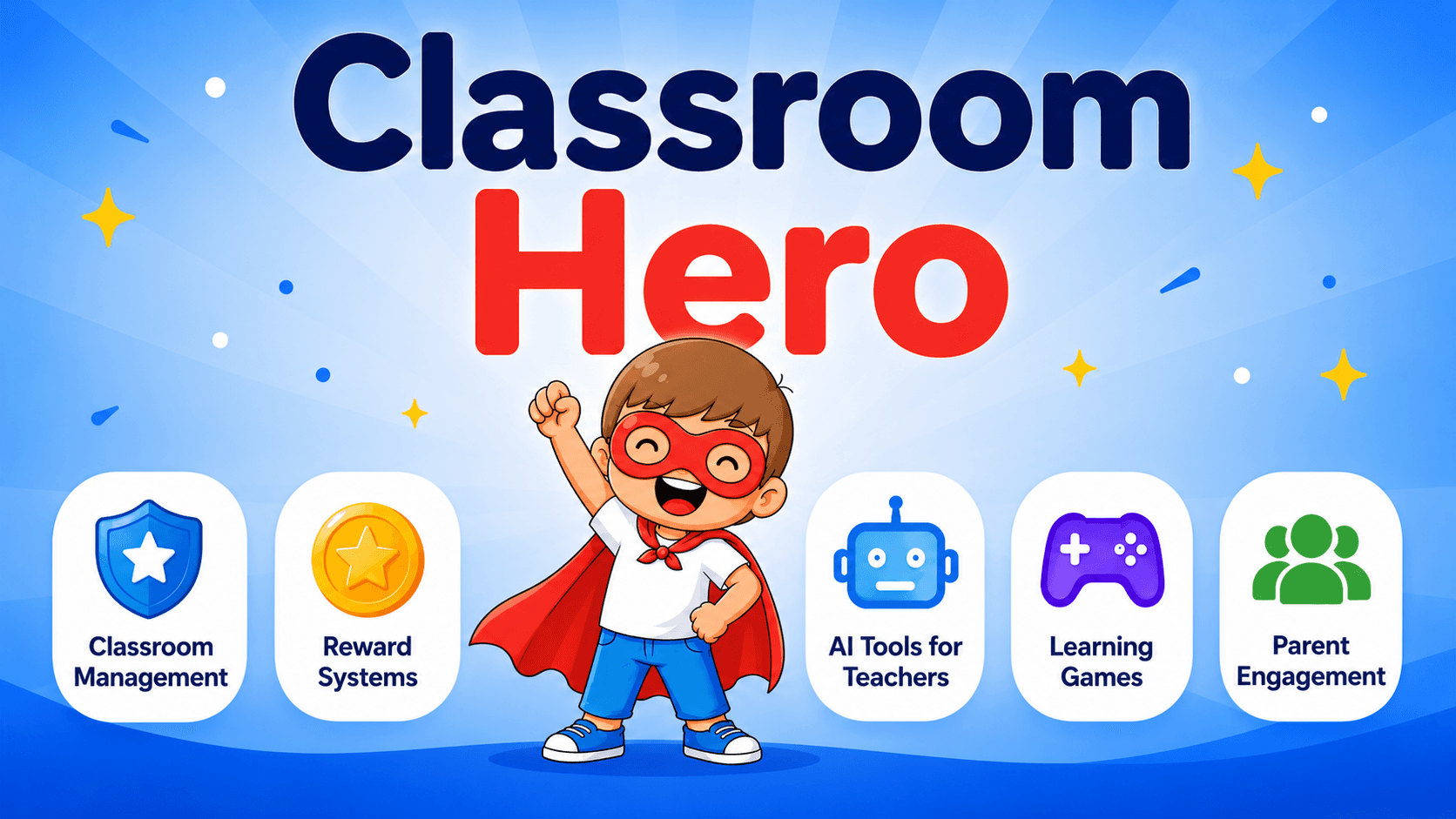
Classroom Hero connects nine daily games, classroom rewards, avatars, class goals, attendance integration, Class Screen, parent task lists, and Atlas AI into one system — so game-based learning has somewhere lasting to live.
Ready to bring game-based learning into your classroom? Create a free Classroom Hero account and start with one daily game this week.