
2026 State of Classroom Rewards Report
Original Classroom Hero research on what teachers reward, what students redeem, and how classroom motivation moves across the school year.
Why this report exists
Every year, millions of classroom rewards are given across schools, but very little public data exists about what teachers actually reward, what students redeem, and how motivation changes across the year.
We analyzed more than 447,000 classroom achievements from 2,500 teachers, 3,200 active classrooms, and approximately 40,000 students using Classroom Hero. This is not a national survey of every school — it is a large-scale look at teachers who run digital points, stores, and class goals in real classrooms.
Key findings at a glance
Teachers awarded 447,241 positive achievements across ~40,128 students in 3,198 active classes.
Positive recognition outpaced corrections by roughly 10.2 to 1.
About 26% of all awards were generic "quick rewards."
Top named behaviors: listening, on task, organizing, reading, participation.
Students redeem candy and snacks most often — even when teachers stock many experience privileges.
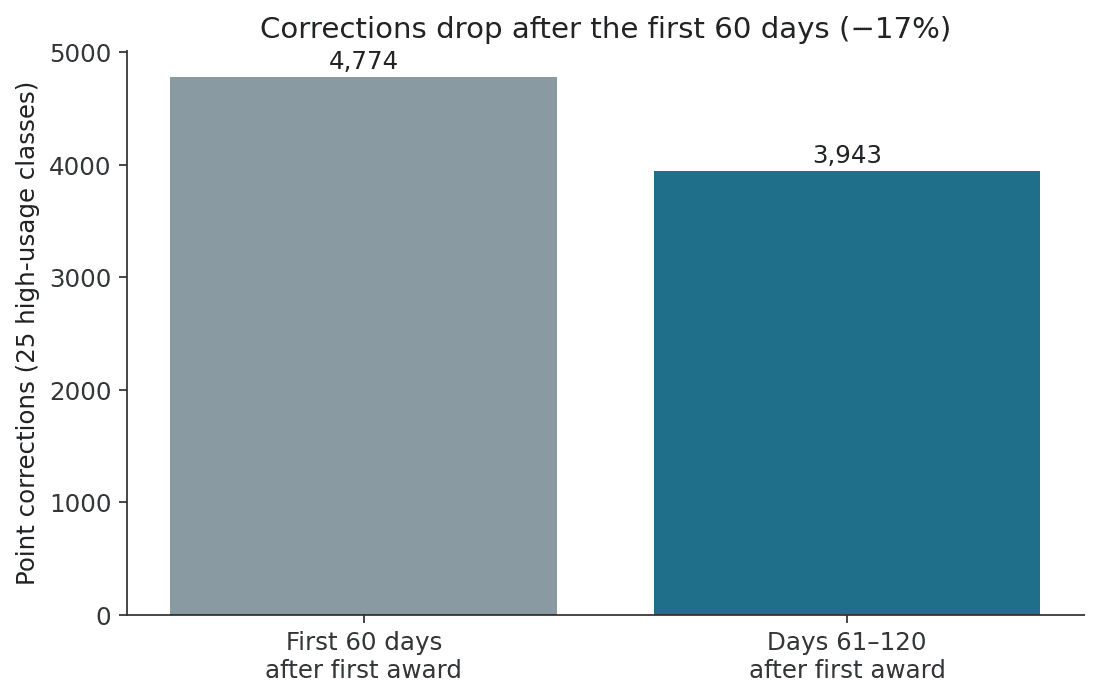
In high-usage classrooms, corrections fell about 17% from the first 60 days to days 61–120 after awarding began.
Tuesday is the busiest praise day; September peaks and December dips.
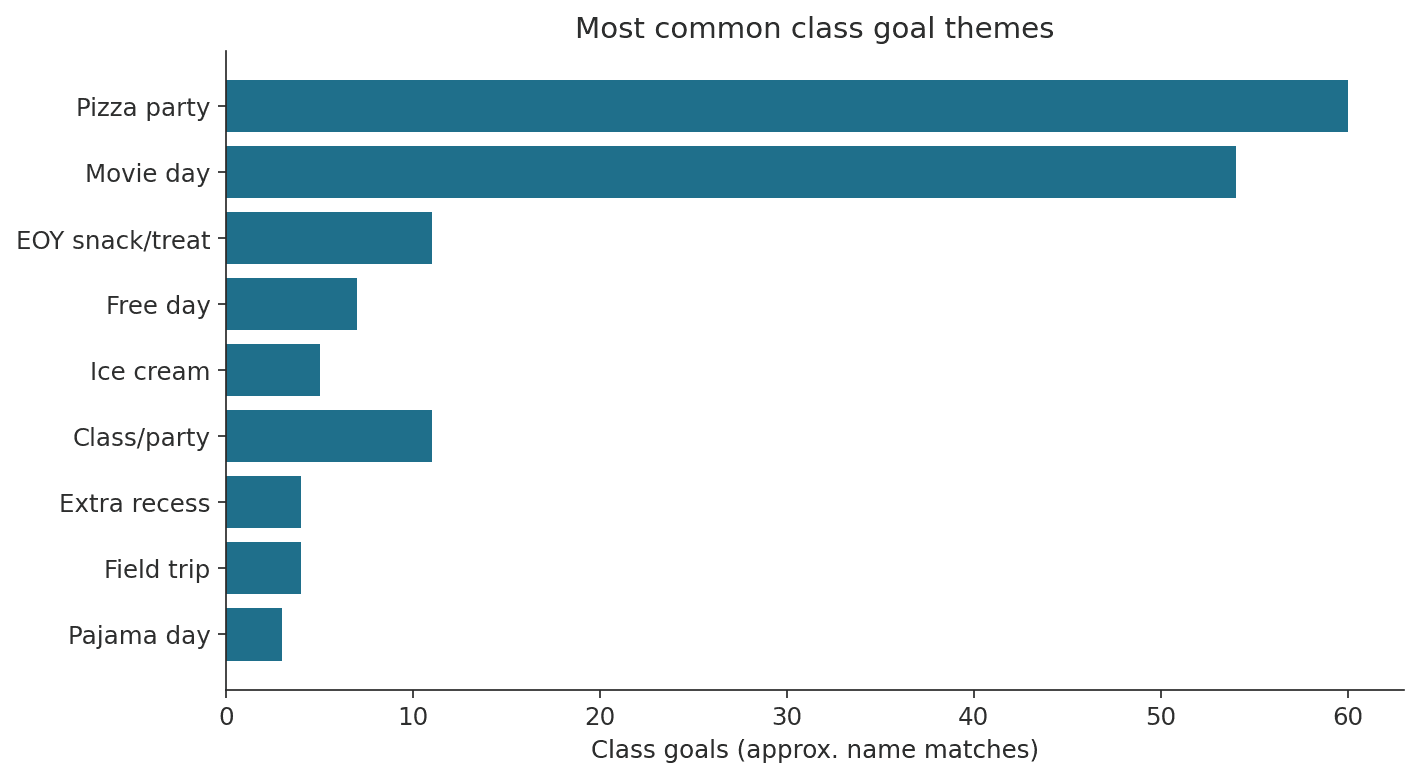
Class goals cluster on pizza parties and movie days; only about 4% reach 100% completion.
Praise vs correction
PBIS training often recommends at least a 5:1 positive-to-corrective ratio. Across Classroom Hero classrooms, teachers averaged about 10.2 positives for every correction (447,241 achievements vs 43,801 subtractions). Digital reward systems appear to make frequent reinforcement easier to sustain during real instructional time.
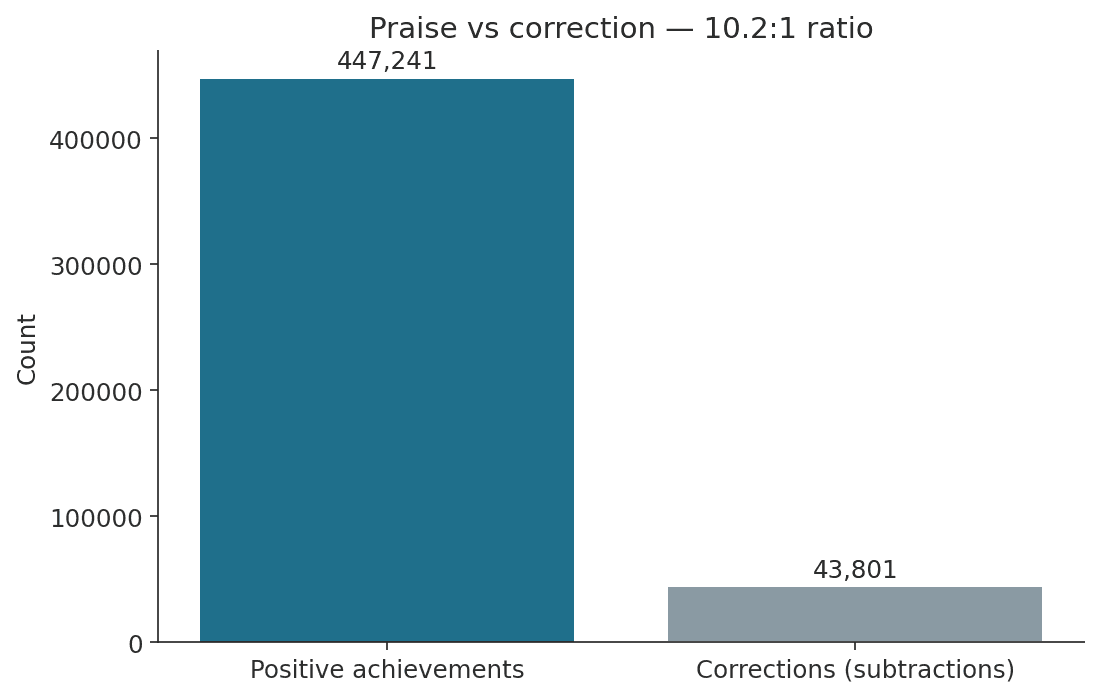
That ratio does not mean classrooms have no standards. Teachers who stick with a points system tend to flood the zone with small, specific positives — listening, on task, following directions — while keeping corrections targeted (off task, calling out, not following directions).
In 25 high-usage classrooms (each with at least 2,000 achievements), corrections fell from 4,774 to 3,943 (−17%) when comparing the first 60 days after the class's first award with days 61–120. Fifteen of those 25 classes improved; the median classroom drop was about 35%. Treat the first 4–8 weeks as a teach-the-system window, then reassess once routines stick.
Related: How Reward Systems Improve Student Behavior.
What behaviors teachers reward most
Excluding the catch-all "quick reward" label, the top named achievements were:
Excellent work! (~11,560)
Listening (~11,180)
On task (~10,130)
Organizing your things (~8,050)
Reading (~7,610)
Participation (~7,430)
Following directions (~6,740)
Working hard (~6,520)
Quietly on task (~6,180)
Math game / daily game (~5,660)
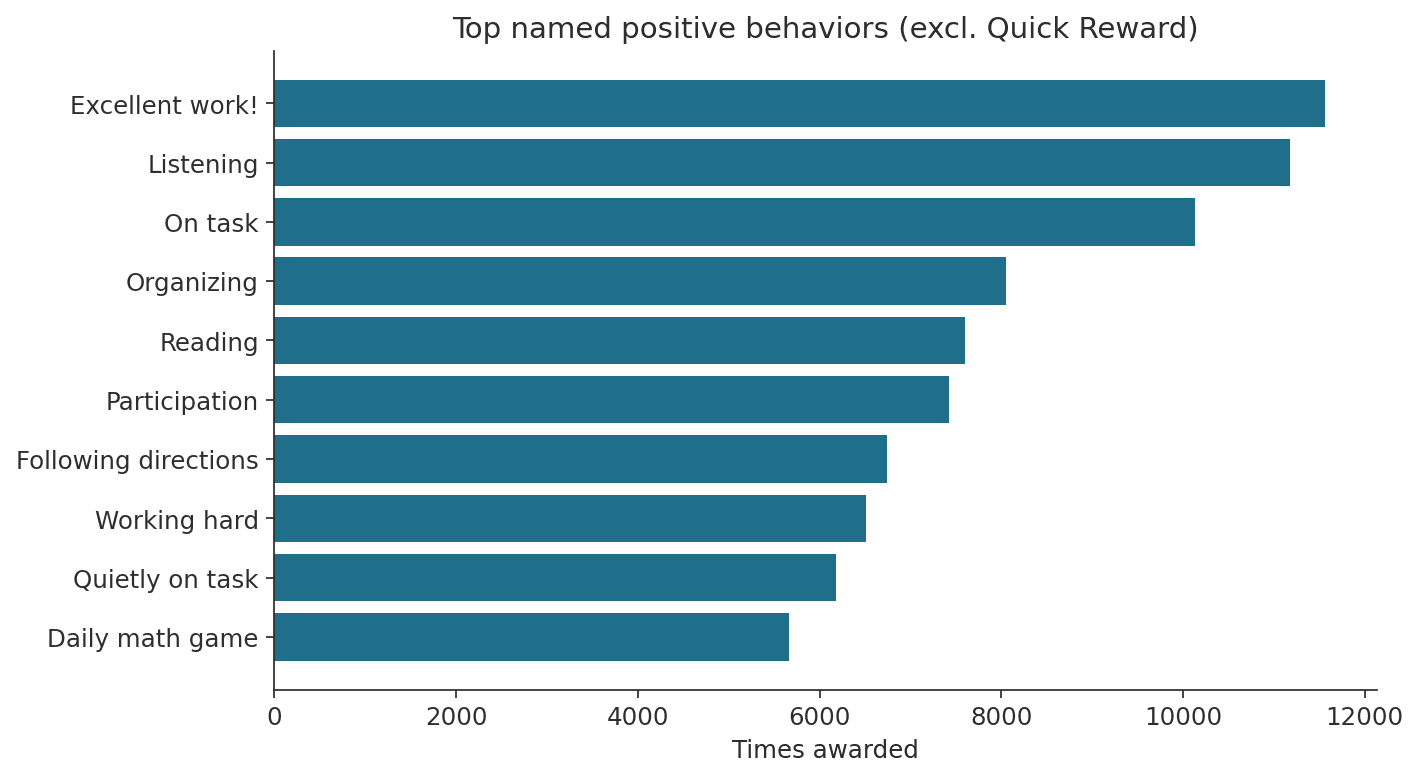
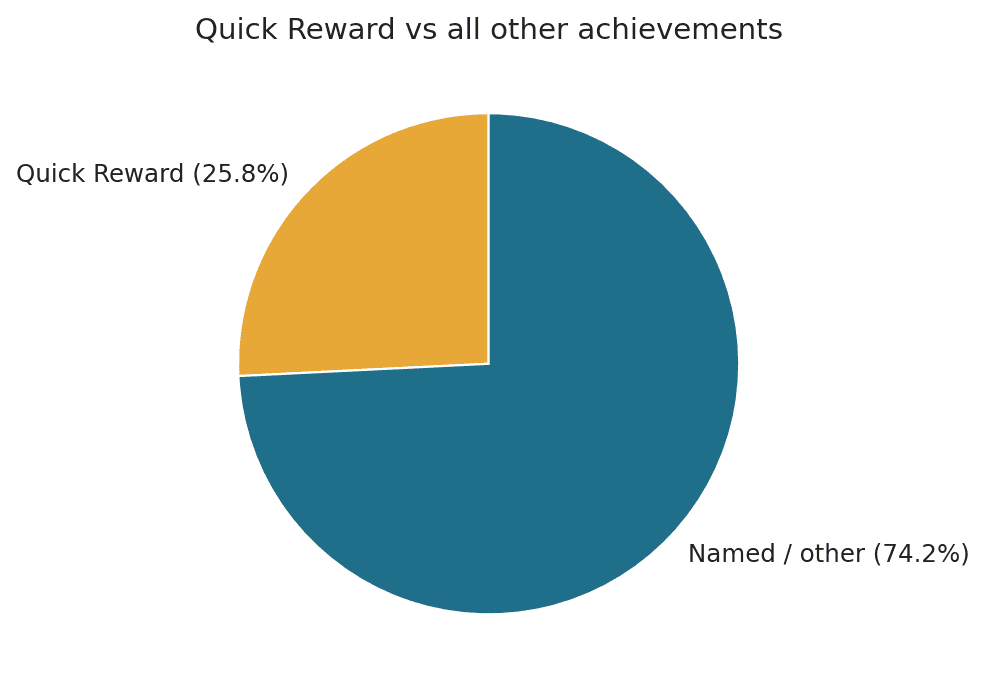
Routines and academics lead because they keep the room teachable. Quick rewards (~115,000 awards, ~26% of all positives) are how teachers keep the praise ratio healthy when there is no time to pick a label mid-lesson. Use named behaviors when you need clarity for students or PBIS fidelity; use quick rewards for momentum.
When students earn the most rewards
By weekday
Monday: ~76,000
Tuesday: ~90,000 (peak)
Wednesday: ~86,000
Thursday: ~82,000
Friday: ~82,000
Saturday / Sunday: much lower (weekend / home activity)
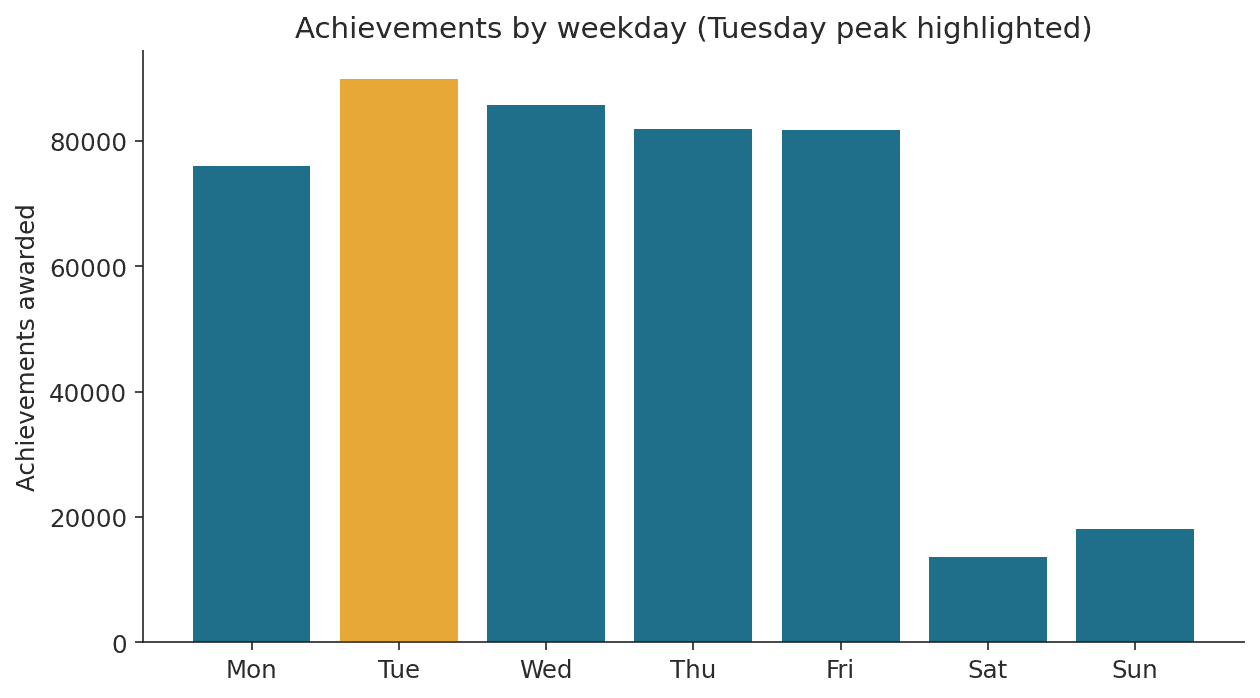
Tuesday leads the week. A practical read: Monday is often spent establishing routines, while Tuesday is the first full instructional day. Launch challenges or new store items on Mondays so momentum lands midweek.
By school year (Aug 2025 – Jun 2026)
August: ~32,600
September: ~42,600 (peak)
October: ~28,100
November: ~21,900
December: ~16,400 (trough)
January: ~32,900
February: ~35,600
March: ~37,200
April: ~29,600
May: ~27,900
June: ~12,100
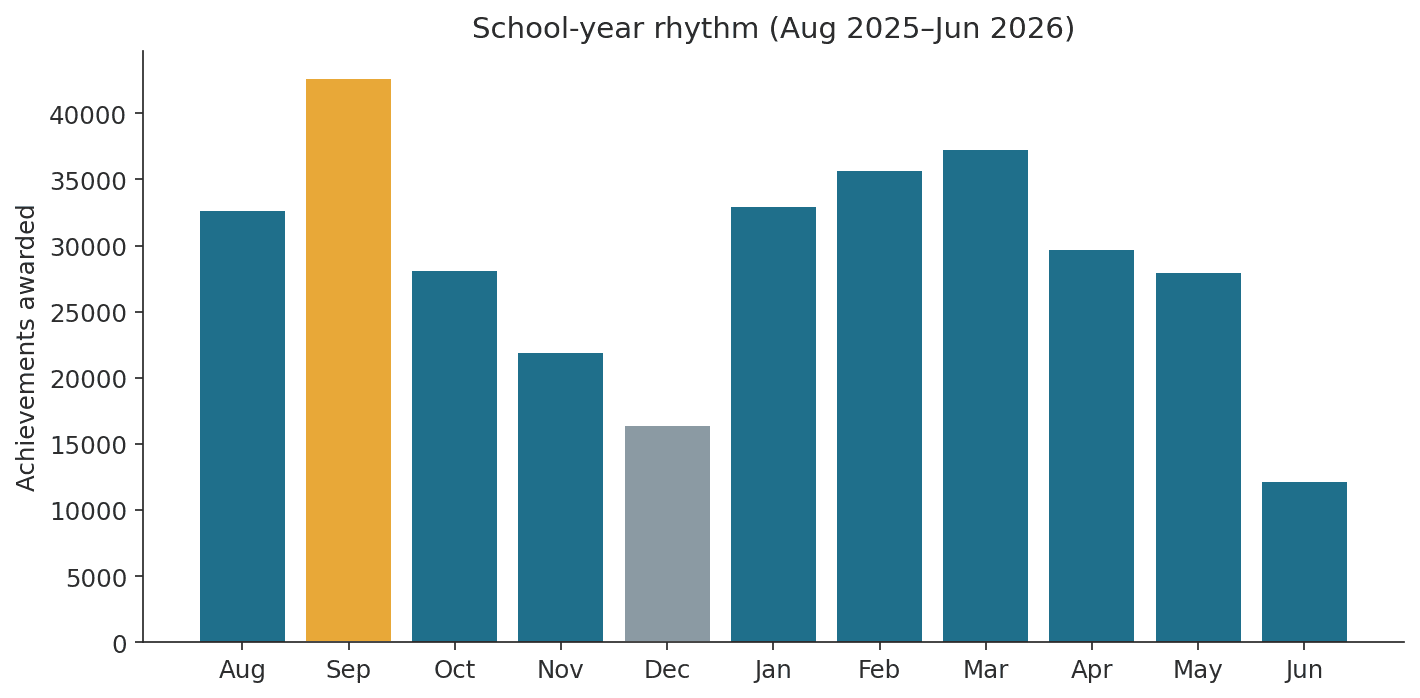
September was nearly 3.5× as active as June. Treat August–September and the return from winter break as system refresh windows — new class goal, repriced store, retaught expectations — not months where the economy "should just keep working."
Related: Transform Student Motivation with Points and Rewards.
What teachers stock vs what students buy
Teachers frequently define experience privileges: phone time, lunch with the teacher, homework passes, and test retakes. Students, however, redeem tangible treats and small supplies most often — candy, chips, pencils, stickers — with restroom privileges also ranking high in some classrooms.
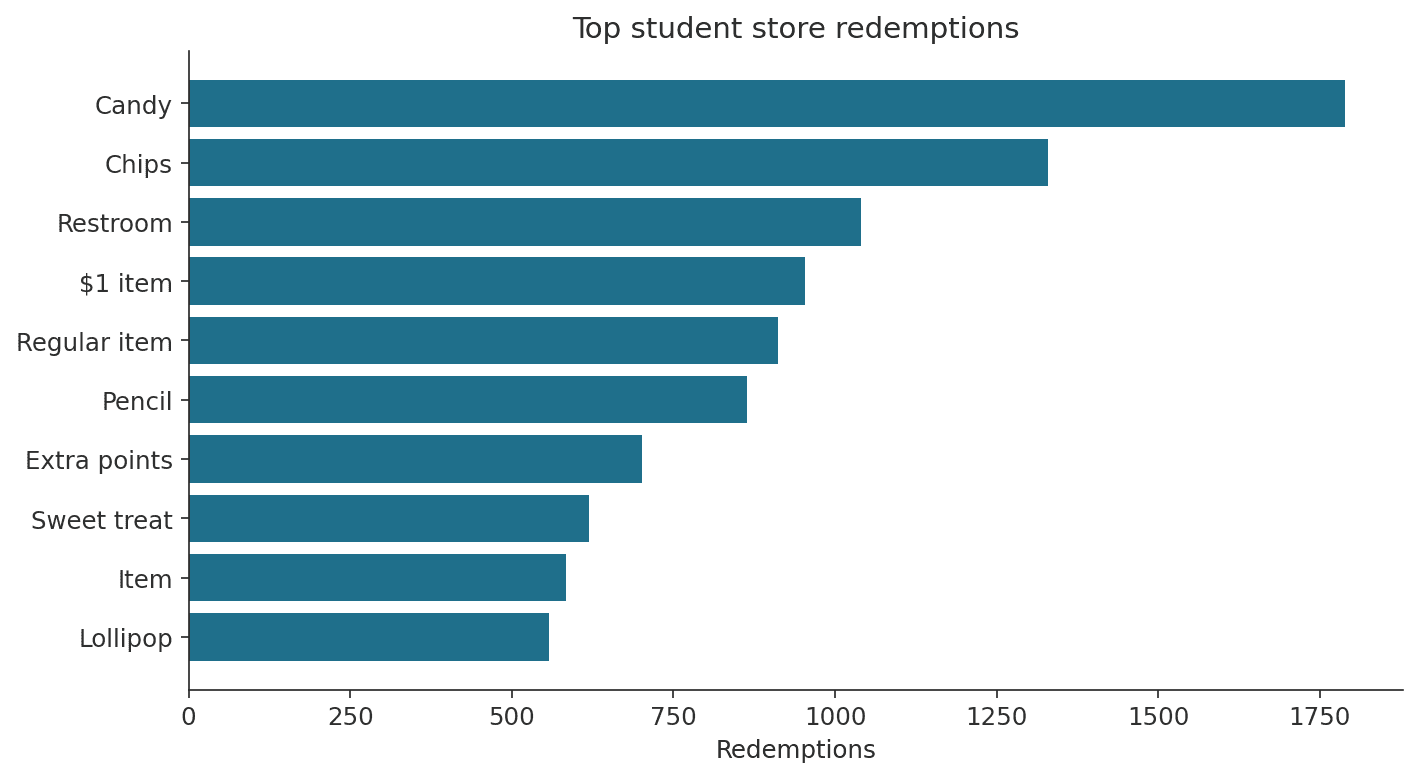
Aspiration and behavior diverge. Teachers stock the store they want to run; students buy what feels immediate and cheap. A healthy economy needs both: high-velocity items so average students win weekly, and premium experiences so the system still points toward autonomy and relationships.
Related: Classroom Reward System Ideas · How to Build a Class Economy That Actually Works.
Class goals and classroom currency
Most common themes across ~528 class goals: pizza party, movie day, end-of-year treats, free day, ice cream, extra recess, pajama day, and field trip. Shared goals work best when the theme is vivid and the math is finishable — class size × daily contributions × school days, with a calendar date on the board.
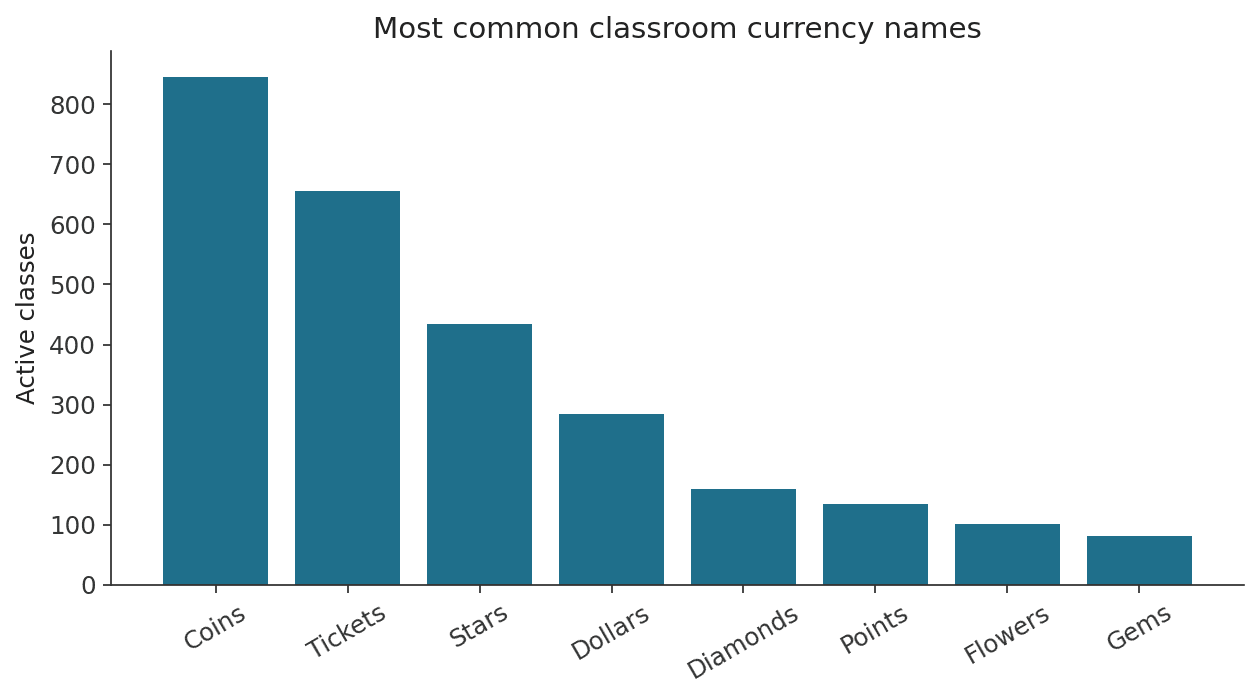
Most common currency names among active classes: Coins (~846), Tickets (~655), Stars (~435), Dollars (~285), Diamonds (~159), and Points (~134). Pick a name students can say out loud and use it consistently across slides, store, and goals.
Related: Class Goal Student Contributions.
What this means for your classroom tomorrow
Aim for frequent, small positives — volume beats rare mega-awards.
Name the behaviors you care about; keep a quick-reward option for speed.
Stock a balanced store: cheap wins + premium privileges.
Set class goals with finishable math and a calendar date.
Refresh the system in September and again in January.
Expect the first 4–8 weeks to be louder on corrections; reassess once routines stick.
Measure your own praise:correction ratio for one day before changing anything else.
These findings describe activity on Classroom Hero (platform data, July 2026), not a probability sample of every U.S. school.
Ready to put these findings to work in your classroom? Create a free Classroom Hero account and start awarding points, stocking a student store, and running class goals that students can actually finish.