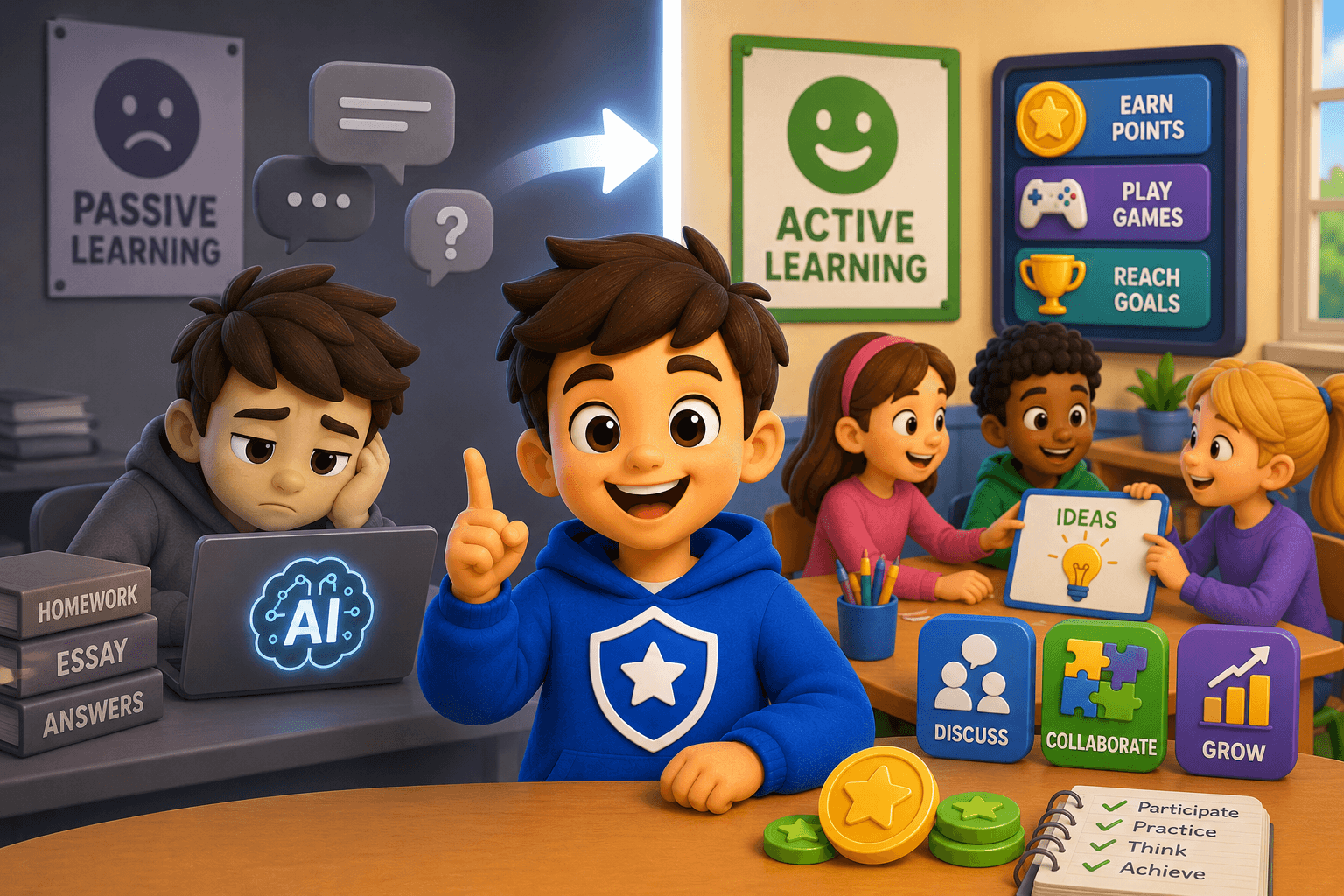
The Hidden Problem With AI in Schools: Passive Learning
Artificial intelligence is rapidly changing classrooms across the country. From AI-generated essays to instant homework help, students now have access to tools that can answer questions faster than ever before.
But as schools debate whether to embrace or restrict AI, many teachers are beginning to notice a different issue emerging inside classrooms:
Students are becoming passive learners.
Instead of struggling through difficult problems, participating in discussions, or practicing critical thinking skills, some students are beginning to rely on AI to do the thinking for them.
The challenge for schools is no longer just “How do we stop cheating?”
It’s becoming:
“How do we keep students actively engaged in learning?”
That question matters even more in elementary classrooms, where participation, motivation, and daily engagement are essential for long-term academic growth.
Why Passive Learning Is Becoming a Bigger Problem
AI tools can be incredibly useful when they help students:
brainstorm ideas
practice concepts
receive feedback
explore topics independently
But problems start when students stop actively participating in the learning process.
Many teachers are seeing students:
rushing to AI for answers immediately
avoiding productive struggle
participating less in classroom discussions
losing focus during lessons
depending on shortcuts instead of understanding concepts
This can create a classroom environment where students complete assignments without fully engaging with the material.
And while AI can generate responses instantly, it cannot replace:
curiosity
collaboration
classroom discussion
creativity
persistence
social learning
Those skills are still developed through active participation and consistent classroom engagement.
Why Engagement Matters More Than Ever
As AI becomes more common in education, student engagement is becoming even more valuable.
Students who are actively involved in their classroom environment are more likely to:
participate in discussions
stay focused during lessons
build stronger classroom habits
retain information
develop independent thinking skills
That’s why many schools are shifting more attention toward:
classroom participation
gamified learning
positive reinforcement
collaborative activities
interactive routines
The goal is not necessarily to eliminate AI from classrooms.
The goal is to create learning environments where students remain active participants instead of passive observers.
The Difference Between Active and Passive Learning
Passive Learning
Passive learning often looks like:
copying answers without understanding them
minimal participation
disengagement during instruction
relying entirely on external tools
memorizing without applying concepts
Active Learning
Active learning typically includes:
classroom discussion
hands-on practice
collaborative problem solving
educational games
reflection and feedback
student participation systems
Even small classroom routines that encourage participation can make a major difference in keeping students engaged.
Why Gamified Learning Is Growing in Popularity
One reason gamified learning has become more popular in elementary education is because it encourages students to actively participate throughout the day.
Many teachers are discovering that students respond positively to:
classroom points
goals
learning games
reward systems
team activities
classroom economies
When students feel involved, recognized, and motivated, they are often more willing to participate in lessons and classroom routines.
This is one reason why many classrooms are adopting digital classroom management platforms and interactive learning tools.
You can explore examples of interactive educational activities on the Daily Learning Games page.
Building Classrooms That Encourage Participation
Teachers do not need to compete with AI tools.
But classrooms do need systems that encourage students to stay engaged.
Some strategies schools are using include:
daily participation routines
collaborative classroom activities
classroom goal systems
positive reinforcement
student reward systems
educational games
behavior tracking
classroom celebrations
Strong classroom culture becomes even more important when students have constant access to technology outside school.
The classroom experience itself needs to remain interactive, social, and motivating.
How Classroom Hero Supports Student Engagement
Classroom Hero is designed to help teachers build engaging classroom environments through:
classroom point systems
behavior tracking
classroom rewards
student avatars
classroom goals
educational games
daily engagement tools
Teachers can use the platform to encourage participation, reinforce positive behaviors, and create motivating classroom routines throughout the school day.
Schools looking for classroom engagement ideas can also explore the growing collection of materials in the Teacher Resources section.
To learn more about available tools and functionality, visit the Features page.
AI Is Not Going Away — But Engagement Still Matters
AI will continue shaping the future of education.
The schools that succeed will likely be the ones that find the right balance between:
technology
engagement
participation
critical thinking
classroom culture
Students still need opportunities to:
struggle through problems
collaborate with classmates
stay motivated
practice communication skills
actively participate in learning
Technology may continue evolving rapidly, but active learning will always remain important.
Frequently Asked Questions
Is AI bad for students?
AI itself is not necessarily harmful. Many AI tools can support learning when used appropriately. The challenge schools are facing is ensuring students remain actively engaged in the learning process instead of becoming overly dependent on shortcuts.
What is passive learning?
Passive learning happens when students consume information without actively participating, practicing, discussing, or applying concepts themselves.
How can teachers improve classroom engagement?
Many teachers improve engagement through:
classroom routines
educational games
participation systems
collaborative activities
positive reinforcement
classroom rewards
Why is gamified learning effective?
Gamified learning can increase motivation and participation by making classroom activities more interactive and rewarding for students.